The Art of Writing for Video Games

Learn game narrative design with writers behind billion-dollar franchises. From idea to pitch
  • Project Based
  • ·
  • Book Centered
  • ·
  • 10 weeks
Picture of Flint DillePicture of John Zuur Platten
Flint Dille, John Zuur Platten
Writers of billion-dollar franchises
Learn directly from the author
  • 4.6 stars on Amazon
  • 3.9 stars on Goodreads
Cohort
Learn in a structured, classroom environment
No cohorts scheduled. Get notified at launch
or
Solo
Learn solo at your own pace
Trusted by students from
  • niantic.png
  • stanford.png
  • activision.svg
  • nintendo.svg
  • niantic.png
  • stanford.png
  • activision.svg
  • nintendo.svg
  • niantic.png
  • stanford.png
  • activision.svg
  • nintendo.svg
  • niantic.png
  • stanford.png
  • activision.svg
  • nintendo.svg
 
What you'll learn
  • Create a narrative for your game
  • Create compelling characters
  • Create compelling stories for role-playing games
  • World building for games
  • Various types of storytelling
  • Transmedia: The expansion of the Game IP (creating franchises)
You definitely don't need a degree to start a career as a game writer. I've been lucky to have met and worked with Gary Gygax, who has no degree, he created Dungeons and Dragons. I've done tons of stuff with Frank Miller, who also has no degree, and also created all these comics. Joe Ruby created Scooby-Doo and didn't have a degree either. The truth is, it helps to have a degree but it doesn't hurt not to have it.
Picture of Flint Dille
Flint Dille
Instructors

Teaching Team

Picture of Flint Dille
Flint Dille
  • Writer for Transformers, G.I Joe, Dead To Right, Riddick and many more
Flint Dille is the most produced game writer globally, with over 14 Gold and platinum games, including: Uncharted, Riddick, Diablo, and Ingress. Many of his scripts received critical acclaim and have withstood the test of time, as evidenced by ongoing franchise opportunities. He was creative lead at Niantic from 2012-2020, creators of Ingress and Pokemon Go. He is currently Narrative Lead at Deviation Games.
Picture of John Zuur Platten
John Zuur Platten
  • Writer for Jurassic World, Ghostbusters, Riddick, Tomcat Alley and many more
John Platten is a writer and designer who has shipped over 80 games. With over 30 years of experience in the business, John has written for established franchises such as Jurassic World, Ghostbusters, The Fast and the Furious, and The Chronicles of Riddick. He was a lead creative at Niantic Labs, creators of Ingress and Pokemon GO. John has also written feature films, comics, television and streaming content
Syllabus

Course Outline

Week 0 - Kickoff
  • Welcome to the Course
  • Goals of the Course and the Project (brief)
  • Meet Your Instructors
  • Course Logistics (LMS, Discord, etc.)
  • What We’ll Cover
Week 1 - Creating a Narrative
  • What is Narrative (Story) within the context of games and why does it matter
  • World, Character, Tone, and Theme
  • Strategies that allow you to outline a story quickly
  • Writing strategies
  • The bad idea and how to build on it
  • The Writing Process
Week 2 - Characters
  • The various type of game characters - PC, NPCs, Ambient Characters, Cannon Fodder
  • Character Alignments
  • 3rd person (tethered) vs. 1st person vs. Cinematic Camera
  • Character Archetypes
  • Matching characters to core gameplay mechanics
  • Character Template and how to use it
Week 3 - Worlds
  • Paracosms and how they are created
  • Famous fictional worlds and why they work
  • Creating backstories for your worlds - myths, systems, societies, religions, languages, etc.
  • Reality vs. Hyper-Reality (comic worlds that layer over real ones - Gotham, John Wick)
  • Exploration vs. Linear reveals for your world(s)
Week 4 - Transmedia - the Narrative Landscape
  • Why you should be developing IPs rather than one-off ideas
  • Envisioning your IP across multiple media
  • Creating complementary expressions of a single idea
  • Budgetary considerations when you think big
  • Laying the groundwork for a franchise
  • Improving your chances by providing the vision
Week 5 - Executive Summary and Pitching
  • What should be included
  • Pitching your idea - 3 main points
  • Examples and discussion of what works and what doesn’t
  • Including visuals
  • Punching up the text and presentation
  • What’s next - building your portfolio
  • Career considerations
  • The future and how “you” fit into it
Week 6 - The High-Level Design Document
  • A look at the various platforms for games: Apps, Consoles, PC, AR/VR/ARGs, Social Media games - FB, Instagram, Snapchat, TikTok
  • How platforms affect both the narrative content and the story-telling strategy
Week 7 - Project Submission
  • Complete your game design document
  • Pitch your game concept to Flint, JZP and friends
Project

Design and Pitch Your Game Idea

Project Spec (v1)
About
Design and pitch your game idea by developing a comprehensive game design document and presenting it to instructors and invited guests
Featured Projects
Student project Fish Upon a StarStudent project UndeceivedStudent project Grayveil Home
Audience

Who's This Course For?

Professional and aspiring writers looking to develop stories in the context of games

Game designers and indie game developers wanting to work amazing stories into their games

Enthusiasts curious about learning how to create narratives in games

Teaching Methods

How You'll Learn

Project-Based
Learn from a concrete project with real-world constraints
Solo
Applied in
  • Cohort
  • Solo
Book-Centered
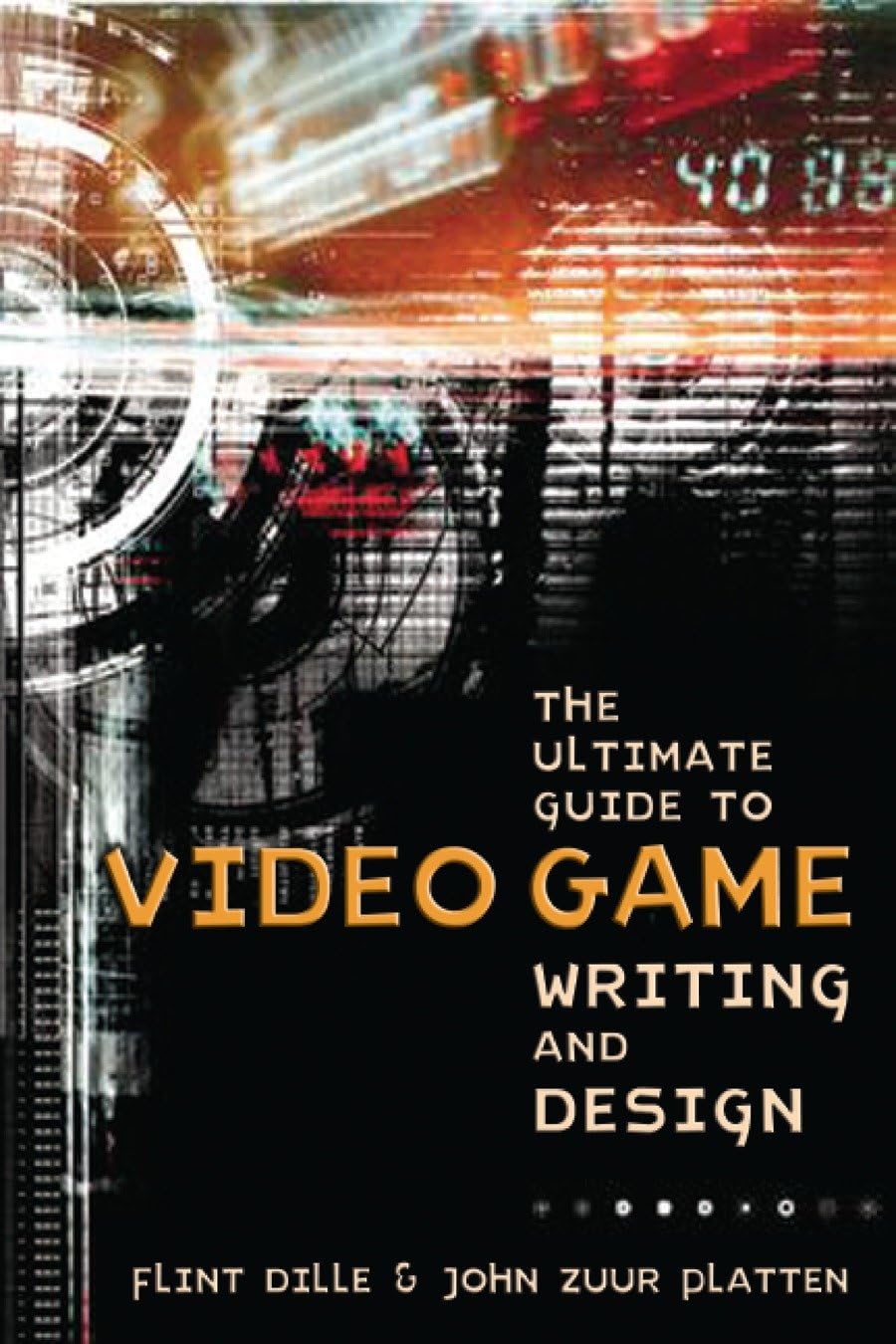
Course modules expands on The Ultimate Guide to Video Game Writing and Design chapters and require weekly readings from the book
Applied in
  • Cohort
  • Solo
Flipped Learning
Students review the core materials independently during the week, then join a 1-hour live session with instructors and peers for active engagement
Applied in
  • Cohort
Testimonials

What Our Students Have to Say

Suzanne Warr
I would say I felt my return on the investment was about 500 fold what I expected. Honestly, the class really just blew me out of the water with how helpful it was and how much I learned. And the cherry on top is this awesome cohort!
Jaron R. M. Johnson
My name is Jaron, and I'm a creative director for a tabletop design company. I'm a project manager by day and a tabletop game designer by night, which provides me some really handy skills for a hopeful career in video game design! When I saw this course, I wanted to learn from folks who were already in the industry about what it was like behind closed doors. I was hoping to pick up some helpful templates and learn what structures and systems people are using in the industry, so I could apply them to my own workflow. That's exactly what I got from the course! I learned a lot about worldbuilding from the ground up; characters, levels, cinematics, all contributing to a central game narrative. Picking up systems for developing interesting and engaging characters and cutscenes are going to help me put it all together in the end. Learning directly from the author was definitely helpful. A lot of what we learned was content that we could not have possibly picked up from the book alone. I loved hearing both Flint and JZP riff off of one another during the course, and getting feedback directly from Flint in our feedback sessions was very helpful to know if I was on the right track or not. If you're a person who wants to take your game narrative skills to the next level, who wants to learn some systems that are really used in the industry, and to walk away with helpful templates and new connections with like-minded people, this course is absolutely for you!

Sarah Chernik
I found that not only was I learning from the author's themselves, I was learning from the other students with everyone's different backgrounds. We literally had students from all over the world. It really gave a lot of insights into different ways to be creative different kinds of games that you could make.
Leonardo Sewald Cunha
As someone with a business-oriented background coming from outside the games industry, I thought the course not only helped me hone my creative writing skills but it also gave me valuable insight about what goes on inside the industry. The staff are knowledgeable and experienced, and the interactions with everyone else during the course make for amazing networking opportunities. All in all, it's a great experience, one that I'd definitely recommend, either for experienced writers as well as for aspiring industry professionals.
Noel Simsiman
My name is Noel, and I'm currently a Software Project Manager at Full Sail University. As a former Producer working with different indie studio teams, I want to understand how various team members work. I decided to try The Art of Writing for Video Games because I wanted to understand better the challenges that narrative designers and writers face when developing a game. Not only did I better understand their challenges, but I also developed a creative process helping me develop my ideas. Since completing the program, I refined a previous game idea using my creative process and am looking forward to further developing it. In this course, the instructors teach practical concepts to strengthen my game development career and create real-world scenarios to apply the concepts learned. I learned a lot in this course without having a background in creative writing. I recommend this course to anyone willing to learn how to develop their creative process and cultivate game ideas that anyone could pitch to studios worldwide.
Learning Dynamics

Learn Your Way

SoloCohort
$149
$749
Dynamics

Self-Paced

Learn independently, on your own schedule

Instructor-Paced

Learn in a structured classroom environment, with peers and instructors
Class Materials
Lifetime Access
LMS Features

Basic

Basic

  • Shared Resources
  • Comments
  • Reading Highlights
  • Assignment Solutions
Live Sessions
Physical Book & Materials
Certificate
$200 Completion Bonus
Project Critique & Demo
Access to Instructors
Community Channels & Shared Resources
Faq

Frequently Asked Questions

  • Can my employer cover the program cost?
  • Can I get a full refund if I’m not satisfied? How do refunds work?
  • How are certificates issued?
  • Will this cohort run again?
  • Do I get lifetime access to course materials?
  • What does book-centered means?
  • What’s the difference between Cohort and Solo formats?
  • What can I expect from the pitch session?
Copyright @ 2026 Classpert. All rights reserved.